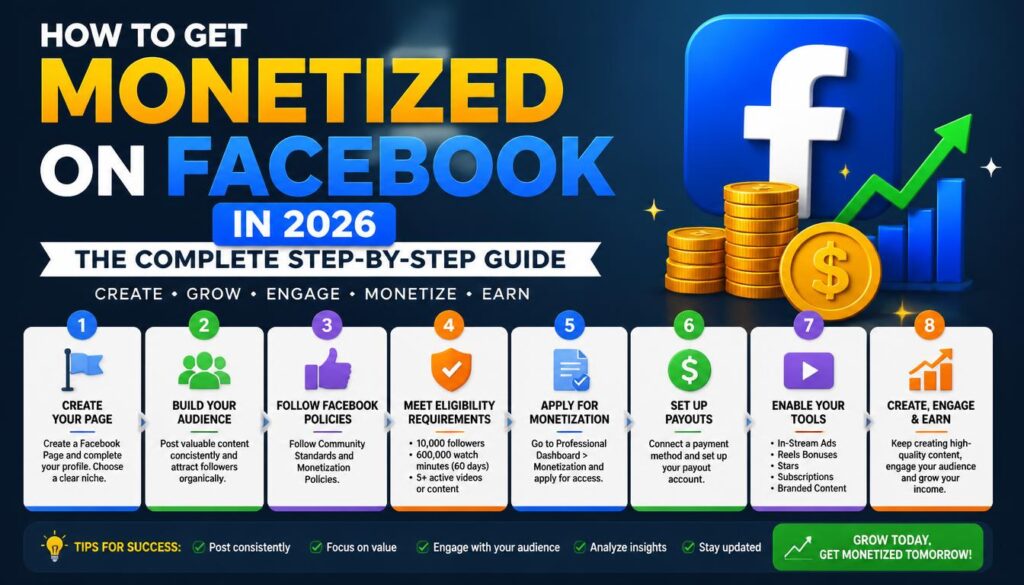
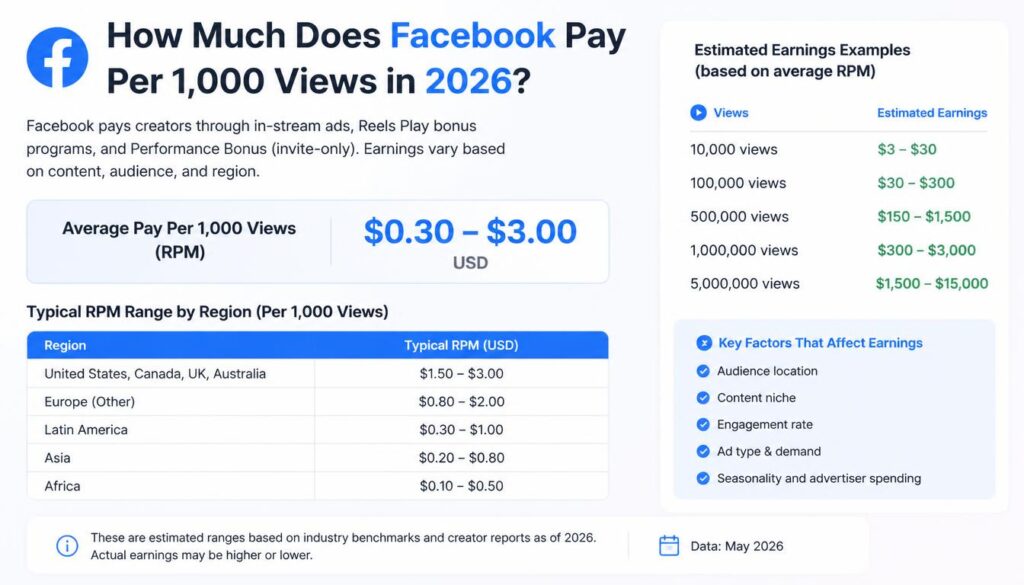
Getting approved for Facebook monetization is one of the biggest milestones for content creators. Whether you’re building a personal brand, growing a business page, or creating entertaining videos, meeting Meta’s requirements is the first step toward earning money from your content.
Many creators spend months posting videos without understanding why monetization isn’t available. In most cases, the issue isn’t a lack of followers—it’s failing to meet Meta’s eligibility standards or violating monetization policies without realizing it.
This guide explains the latest Facebook monetization requirements, how to check your eligibility, and what you can do to improve your chances of getting approved.
What Are Facebook Monetization Requirements?
Facebook monetization requirements are a set of rules created by Meta to ensure that only eligible creators can earn money from their content. These rules help maintain content quality, protect advertisers, and improve the experience for users across the platform.
The exact requirements depend on the monetization feature you want to use. Some programs focus on video performance, while others require consistent audience engagement or access to specific countries.
Regardless of the program, every creator must follow Meta’s Community Standards and Partner Monetization Policies.
Publish Original Content
Original content is one of the most important factors in Facebook monetization.
Meta prioritizes creators who produce their own videos, tutorials, reviews, educational content, and original entertainment. Simply downloading clips from other creators, reposting viral videos, or making minimal edits to existing content can prevent your account from becoming eligible.
Creating unique content not only improves your chances of monetization but also helps build a loyal audience that returns for future videos.
Follow Meta’s Community Standards
Every monetized creator must comply with Facebook’s Community Standards.
Content that promotes violence, hate speech, harassment, misinformation, or other prohibited topics may result in limited distribution or complete loss of monetization privileges.
Even if a single video performs well, repeated policy violations can affect your entire account.
Reviewing Facebook’s policies regularly is one of the best ways to protect your long-term earnings.
Respect Partner Monetization Policies
In addition to Community Standards, Meta requires creators to follow its Partner Monetization Policies.
These policies focus specifically on content quality and advertiser safety. Videos should provide value, avoid excessive sensationalism, and respect copyright laws.
Creators who consistently publish authentic, advertiser-friendly content are much more likely to remain eligible for monetization over time.
Build an Authentic Audience
Facebook values genuine engagement over inflated numbers.
Buying followers, using automated engagement services, or participating in engagement exchange groups may temporarily increase your metrics, but these practices often reduce your credibility and can negatively impact monetization eligibility.
Instead, focus on attracting real followers who regularly watch, comment, and share your content.
An engaged audience is far more valuable than a large inactive following.
Live in an Eligible Country
Not every monetization feature is available worldwide.
Meta gradually expands access to new countries, meaning creators should verify whether their location supports the monetization program they want to join.
If one feature isn’t available in your region, another monetization option may still be accessible.
Checking your Professional Dashboard is the easiest way to see which opportunities are currently available for your account.
Maintain a Healthy Account
A healthy account history increases your chances of approval.
Avoid repeated copyright claims, spam reports, fake engagement, and policy violations.
Creators with consistent publishing habits and positive account standing generally experience fewer issues when applying for monetization.
It’s also a good idea to enable two-factor authentication and keep your account secure to prevent unauthorized activity.
How to Check Your Eligibility
Facebook provides tools that allow creators to monitor their monetization status.
Inside your Professional Dashboard, you can review available monetization programs, see whether your account meets current requirements, and identify any issues preventing approval.
If your account isn’t eligible yet, Facebook often provides recommendations on what needs to be improved before you can apply.
Checking your status regularly helps you stay informed as new monetization features become available.
Common Reasons Creators Get Rejected
Many creators assume they need more followers, but the real problem is often something else.
The most common reasons include publishing reused videos, violating copyright rules, sharing misleading content, receiving repeated Community Standards violations, using fake engagement, or posting content that doesn’t comply with advertiser-friendly guidelines.
Correcting these issues early can significantly improve your chances of qualifying in the future.
Tips to Qualify Faster
Growing a monetized Facebook account requires consistency more than luck.
Publish original videos on a regular schedule, focus on a single niche, encourage meaningful conversations with your audience, respond to comments, and monitor your analytics to understand what performs best.
Videos with strong audience retention and authentic engagement are more likely to be recommended by Facebook’s algorithm, helping you grow naturally over time.
Frequently Asked Questions
Do I need thousands of followers to monetize Facebook?
Not necessarily. Eligibility depends on the monetization program you’re applying for. Some programs emphasize audience size, while others prioritize content quality and engagement.
Can I lose my monetization after getting approved?
Yes. Repeated policy violations, copyright issues, or inauthentic activity can result in monetization restrictions or removal.
Can I monetize reposted videos?
Generally, no. Facebook strongly favors original content, and reused videos may not qualify for monetization.
How often should I publish?
Consistency is more important than volume. A realistic publishing schedule that you can maintain over the long term is usually the best strategy.
Final Thoughts
Meeting Facebook’s monetization requirements isn’t just about checking a list of boxes. It’s about building a trustworthy creator profile that consistently delivers original, engaging, and advertiser-friendly content.
If you focus on quality instead of shortcuts, grow your audience organically, and stay compliant with Meta’s policies, you’ll significantly improve your chances of unlocking monetization features and building a sustainable income through Facebook.